
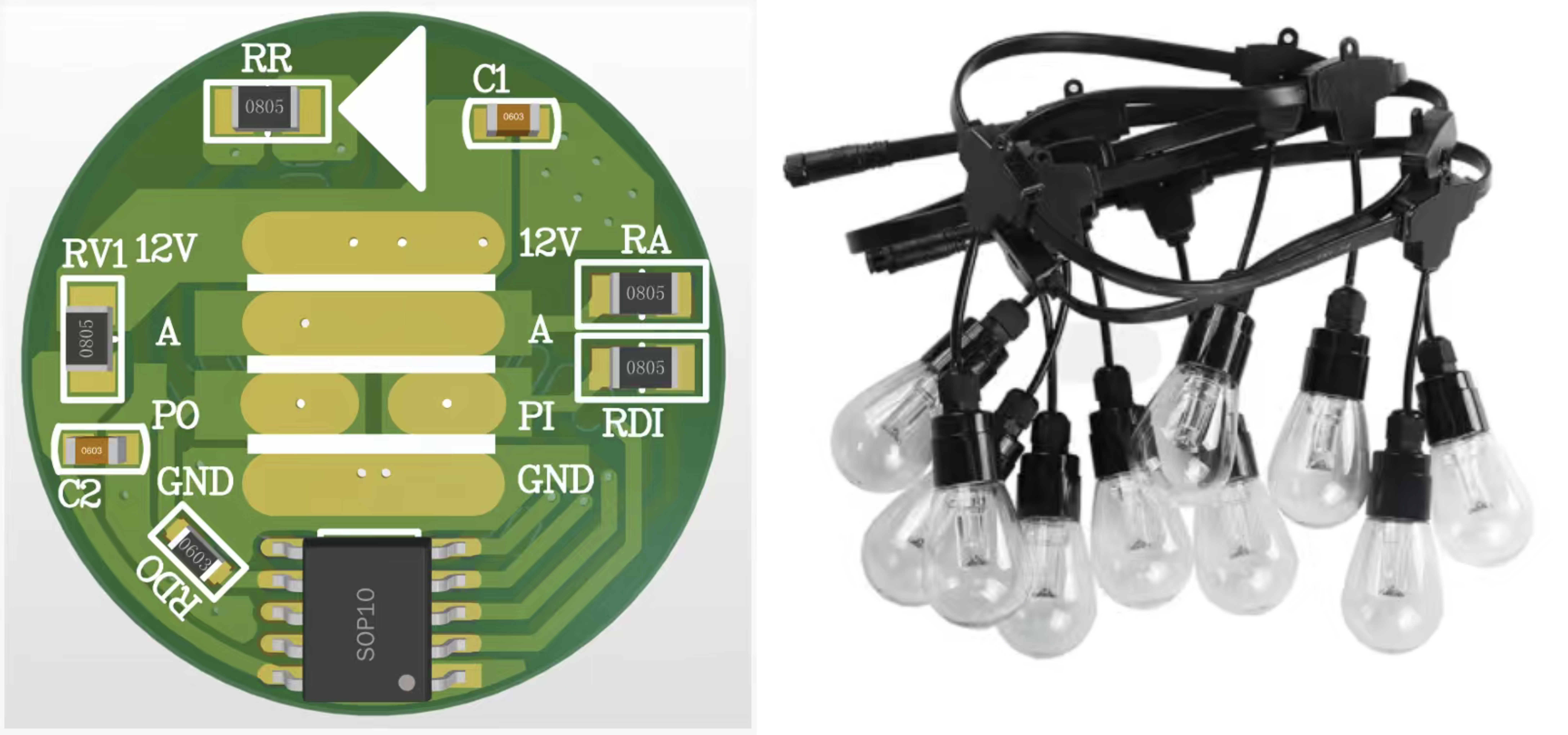
Custom S14 Festoon Bulbs: From Standard DC12V GS8206 to DMX RGBW – A Problem-Solving Journey
At Xuanan Lighting, we believe that every custom project tells a story. Some are straightforward. Others require us to dig deep, test thoroughly, and adapt to real-world conditions.
This is one of those stories.
A client approached us with a vision: they wanted S14 Festoon bulbs with DMX RGBW control — not the standard DC12V GS8206 configuration with 3×5050 RGB LEDs that we often offer.
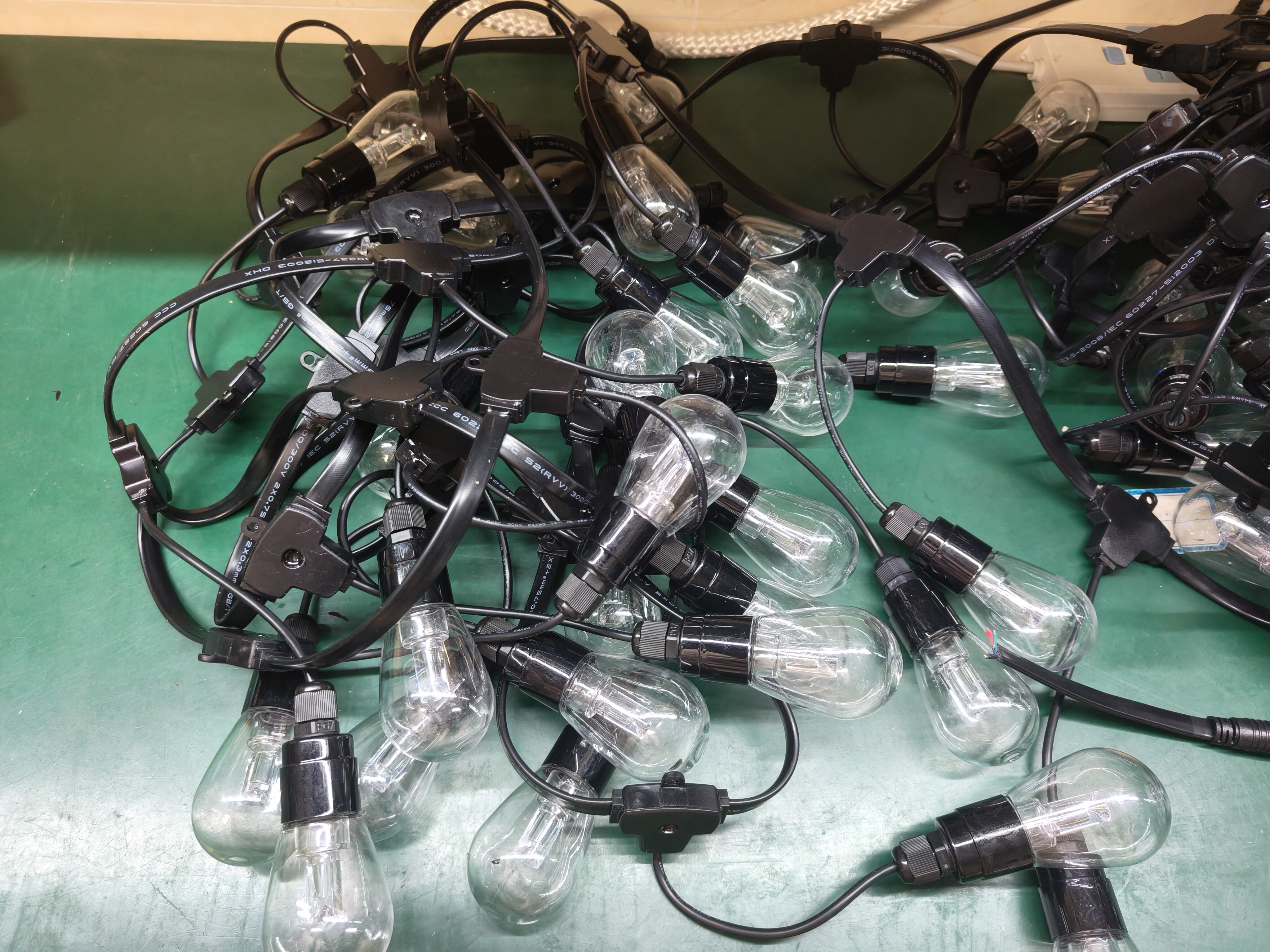
The request seemed simple at first. But as we dove into the details, we uncovered challenges that required careful engineering, extensive testing, and ultimately, a deeper understanding of real-world installation conditions.
Here is how we navigated the process.
The Challenge: Beyond the Standard Configuration
The standard S14 Festoon bulb uses:

Our client wanted something different:

The standard board design could not support this. We needed to redesign the PCB entirely to accommodate the DMX RGBW chipset and the different circuit topology.
Our Solution: Redesigning the PCB
The transition from GS8206 to DMX RGBW required:

We worked closely with our engineering team to create a new PCB layout that would meet the client's DMX RGBW requirements while maintaining the durability and aesthetic of the S14 Festoon bulb.
Power Injection: Conventional Wisdom vs Real Performance
Standard recommendations for S14 Festoon bulbs suggest:

Our client had a different requirement: they wanted longer runs with fewer power injection points.
We took this as a challenge. Through rigorous testing, we discovered that with our redesigned PCB and optimized power distribution, we could achieve:
4 strings (80 bulbs) with a single power injection point — with no voltage drop.
This was a significant improvement over the standard recommendation.
The Catch: Real-World Installation Conditions
However, there was a critical factor we had to consider: real-world installation environments are not the same as lab conditions.
In the field, several factors can affect signal integrity and power distribution:

To account for these variables, we advised the client to take a more conservative approach:
Recommended: Power injection every 3 strings (60 bulbs).
Field Results: Learning from Reality
After installation, our recommendation proved valuable — but it was not the final word.
The client reported that in the actual installation environment, even with power injection every 3 strings (60 bulbs), they still experienced some voltage drop and signal degradation at the far end.
Root cause analysis:

The solution:
The client added additional power supply injection points along the installation — effectively reducing the distance between power feeds.
Final resolution: By adding more power supplies at strategic points, the client eliminated voltage drop and achieved stable, consistent brightness across the entire installation.
Key Lessons Learned

What This Means for Your Custom Festoon Project
If you are planning a custom S14 Festoon installation, here is what we recommend:

Final Thoughts
This project reinforced something we already knew: customization is not just about changing components. It is about understanding the entire system — from PCB design to power distribution to real-world installation challenges.
Our client wanted DMX RGBW Festoon bulbs. We delivered. But more importantly, we worked through the power and signal challenges together — turning a potentially frustrating installation into a success story.
If you are looking for custom Festoon bulbs or other LED lighting solutions that go beyond standard offerings, we are ready for the challenge.
Looking for Custom Festoon Lighting?
We offer S14 and other Festoon bulb configurations with DMX, SPI, and other control options. Tell us your requirements, and we will help you design the right solution.
👉 Contact Us Today to discuss your custom lighting project